Computer Science & Engineering
Acharya Institutes of Technology is one of the best engineering colleges in Bangalore. Be it the way we transact or the way we interact, Computer Engineering’s impact on modern life runs deep and wide. IoT, Cloud computing, Cryptocurrency, Machine Learning, and so on are revolutionizing our day-to-day life. Hence, no doubt, the Department of Computer Science and Engineering is the most sought-after in engineering studies. Computer science Engineering at Acharya is one of the best career options available that connects you with a wide range of career opportunities and in*depth knowledge of modern science and technology.
Established in the year 2000, Acharya Institutes offers the best computer science engineering course in Bangalore. We at Acharya, always strive to be at the forefront of this dynamic field. We prepare computing graduates who are passionate about problem-solving, who are productive and flexible at work, and who contribute to new developments in computing and masters in Coding. We are collaborating with key industrial partners in pursuit of our research and educational endeavors. Join Acharya to explore the best learning opportunities, and experience the best engineering college in Bangalore, India.
Vision
Envisions to be recognized for quality education and research in the field of Computing, leading to creation of globally competent engineers, who are innovative and adaptable to the changing demands of industry and society.
Mission
1. Act as a nurturing ground for young computing aspirants to attain the excellence by imparting quality education.
2. Collaborate with industries and provide exposure to latest tools/ technologies.
3. Create an environment conducive for research and continuous learning.
Duration : 4 Years
Eligibility : Pass in 10+2 / Higher Secondary (HS) / Pre University (PUC) / 'A' Level (with 12 years of schooling) or its equivalent with English as one of the languages. Shall have secured a minimum of 45% marks in aggregate in Physics, Mathematics and any one of the following : Chemistry, Biology, Computer Science, Electronics. AIT admits students as per prevailing rules and regulations of VTU.
- PEO1: Have a successful career in academia, R&D organizations, IT industry or pursue higher studies in specialized field of Computer Science & Engineering and allied disciplines.
- PEO2:Be competent, creative and a valued professional in the chosen field
- PEO3: Engage in life-long learning, professional development and adapt to the working environment quickly
- PEO4: Become effective collaborators and exhibit high level of professionalism by leading or participating in addressing technical, business, environmental and societal challenges
- Engineering knowledge: Apply the knowledge of mathematics, science, engineering fundamentals, and an engineering specialization to the solution of complex engineering problems
- Problem analysis: Identify, formulate, review research literature, and analyze complex engineering problems reaching substantiated conclusions using first principles of mathematics, natural sciences, and engineering sciences
- Design/development of solutions: Design solutions for complex engineering problems and design system components or processes that meet the specified needs with appropriate consideration for the public health and safety, and the cultural, societal, and environmental considerations
- Conduct investigations of complex problems: Use research-based knowledge and research methods including design of experiments, analysis and interpretation of data, and synthesis of the information to provide valid conclusions
- Modern tool usage: Create, select, and apply appropriate techniques, resources, and modern engineering and IT tools including prediction and modeling to complex engineering activities with an understanding of the limitations
- The engineer and society: Apply reasoning informed by the contextual knowledge to assess societal, health, safety, legal and cultural issues and the consequent responsibilities relevant to the professional engineering practice
- Environment and sustainability: Understand the impact of the professional engineering solutions in societal and environmental contexts, and demonstrate the knowledge of, and need for sustainable development
- Ethics: Apply ethical principles and commit to professional ethics and responsibilities and norms of the engineering practice
- Individual and team work: Function effectively as an individual, and as a member or leader in diverse teams, and in multidisciplinary settings
- Communication: Communicate effectively on complex engineering activities with the engineering community and with society at large, such as, being able to comprehend and write effective reports and design documentation, make effective presentations, and give and receive clear instructions
- Project management and finance: Demonstrate knowledge and understanding of the engineering and management principles and apply these to one’s own work, as a member and leader in a team, to manage projects and in multidisciplinary environments
- Life-long learning: Recognize the need for, and have the preparation and ability to engage in independent and life-long learning in the broadest context of technological change
- PSO1:Students shall apply the knowledge of hardware, system software, algorithms, networking and databases.
- PSO2:Students shall design, analyze and develop efficient, Secure algorithms using appropriate data structures, databases for processing of data.
- PSO3:Students shall be capable of developing stand alone, embedded and web-based solutions having an easy to operate interface using Software Engineering practices and contemporary computer programming languages.
Comprehensive Academic Framework
The Department of Computer Science and Engineering (CSE) follows a structured Comprehensive Academic Framework (CAF) designed to ensure systematic curriculum delivery and holistic student development in alignment with NBA guidelines. The framework clearly outlines the total number of theory and laboratory courses, structured contact hours, integrated laboratory components, mini and major projects, internships, and employability skill enhancement modules across all semesters. It emphasizes Outcome-Based Education (OBE) to ensure attainment of Course Outcomes (COs), Program Outcomes (POs), Program Specific Outcomes (PSOs) and Program Educational Objectives (PEOs). To enhance conceptual understanding and global exposure, the department integrates MOOCs through different platforms. Further, industry–academia interaction is strengthened through Value Added Programs (VAPs), industrial visits, Faculty Development Programs (FDPs), guest lectures, workshops, and internship opportunities, ensuring that graduates are technically competent, industry-ready, and professionally responsible.
Innovations in TLP
The Department of Computer Science and Engineering adopts an innovative, technology-driven approach to the Teaching–Learning Process (TLP) to enhance student engagement, analytical thinking, and application-oriented learning. The department consistently integrates ICT-enabled pedagogical methodologies to strengthen conceptual understanding and hands-on competence. To address the dynamic demands of computing and emerging technologies, ICT tools such as smart classrooms, coding platforms, simulation tools, coding labs, and learning management systems are actively incorporated into both theory and laboratory sessions, encouraging mandatory student usage of laptops for programming, experimentation, and collaborative learning.
The department implements the Participative, Experiential, and Problem-Solving (PEP) Model as the core framework for its teaching–learning practices. Through PEP model, the department ensures outcome-based education and continuous improvement. The structured integration of ICT tools and the PEP model have resulted in measurable improvements in academic performance, skill development, certification achievements, research contributions, and overall student competency.
Know More
Academic Achievements
The Department of Computer Science and Engineering has consistently upheld a strong record of academic excellence through the implementation of innovative teaching and learning practices. The adoption of the Participative, Experiential, and Problem-Solving (PEP) model, along with a well-structured Comprehensive Academic Framework (CAF), has significantly enriched the teaching–learning process and improved student academic outcomes. Know More
Since its establishment, the department has secured University Ranks, showcasing its dedication to academic excellence, effective pedagogy, and continuous student mentoring. These achievements reflect the department’s sustained commitment to maintaining high academic standards and fostering student success. Know More
Research and Publications
The Department of Computer Science and Engineering is dedicated to building a vibrant research ecosystem supported by qualified faculty and a progressive research culture. The department has 6 Doctorate holders out of 33 faculty members, reflecting a strong academic foundation that enhances research guidance, innovation, and advanced technical expertise.
The department maintains a well-balanced mix of faculty members specializing in diverse domains such as Artificial Intelligence, Machine Learning, Data Science, Cybersecurity, Cloud Computing, IoT, Block-Chain Technology, Computer Vision, Networking, High-performance computing and Emerging Technologies. This multidisciplinary strength reinforces the core philosophy of Computer Science and Engineering, which integrates computing principles with intelligent systems and real-world problem solving.
Students are actively encouraged to participate in research projects, paper publications, technical competitions, and funded initiatives. Their involvement in research activities fosters analytical thinking, problem-solving abilities, technical depth, and innovation beyond regular classroom learning. Know More
Research Driven Projects
The Department of Computer Science and Engineering adopts a structured, research-oriented, and outcome-driven approach to student projects, ensuring academic rigor, innovation, and real-world relevance. The department follows a systematic and well-defined idea screening process before approving project proposals, ensuring that each problem statement is technically sound, feasible, and aligned with emerging industry trends.
Students are encouraged to propose innovative project ideas in domains such as Artificial Intelligence, Machine Learning, Data Science, Cybersecurity, Cloud Computing, IoT, Blockchain, and other cutting-edge technologies. Emphasis is placed on solving real-world problems with practical and scalable solutions. To foster deeper research engagement and sustained problem-solving, students are motivated to extend their minor project work into their major project. Know More
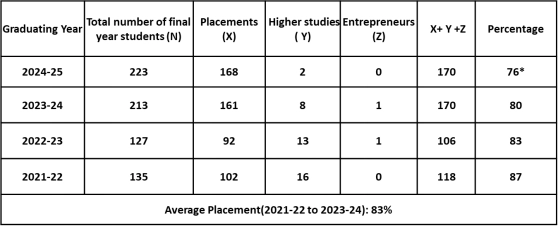
At Acharya Institute of Technology, the Centralized Assessment, Training and Placement (ATP) Division functions as a dedicated unit focused on strengthening students’ employability and career preparedness.
For the Department of Computer Science and Engineering, structured assessment frameworks and continuous mock evaluations are conducted to ensure students are technically competent and industry-ready. Regular aptitude tests, coding assessments to help students build confidence and improve problem-solving efficiency.
In addition to aptitude and soft skills training, CSE students receive Industry Specialization Degree aligned with current industry demands. These include:
- Cloud & Full Stack Development powered by Oracle
- Artificial Intelligence & Machine Learning powered by IBM
- Cybersecurity powered by EC Council
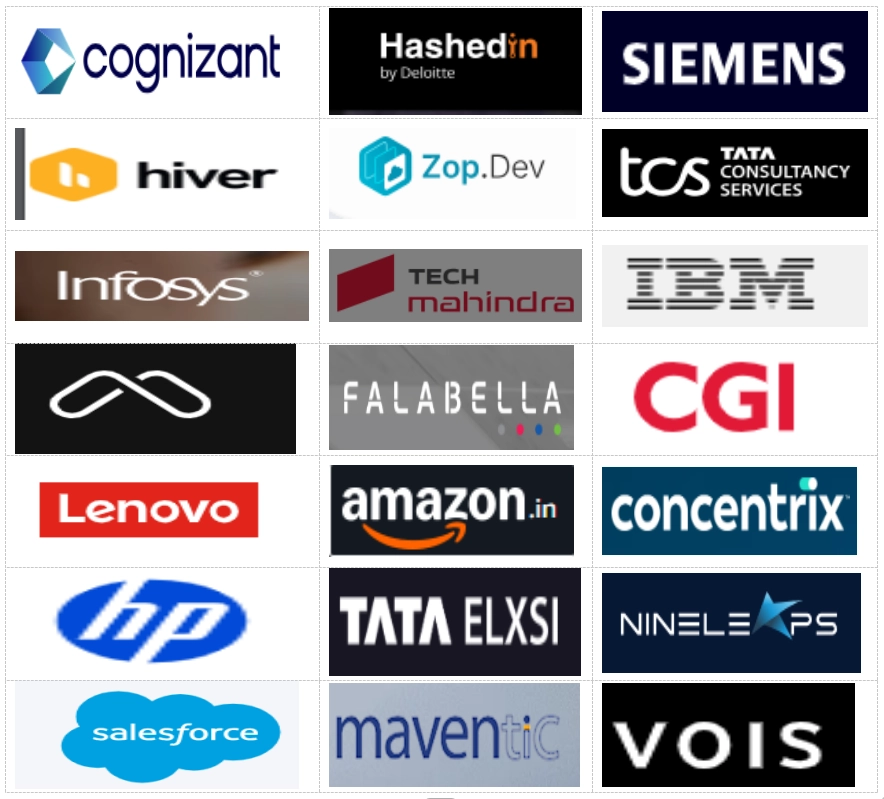
This focused technical upskilling significantly enhances placement opportunities and prepares students to meet the expectations of leading IT and product-based companies.